
Turbine Wreckage to Certified Rebuild
Re-engineering, redesign and insurance-approved manufacture for a steam turbine destroyed by catastrophic failure — from damaged fragments and partial drawings to a better bearing assembly.
Industrial Steam Turbine
Reverse Engineering & Rebuild
Journal, Equalising Thrust & Seals
Insurance Underwriter Sign-Off
Improved Design — Return to Service
Overview
When there are no drawings and no machine left.
An end user of an industrial steam turbine suffered a catastrophic failure — an event more accurately described as an explosion — that completely destroyed the machine. The rotor, bearings, bearing housings and seals were all severely damaged.
While the end user was able to provide some general arrangement (GA) drawings, detailed manufacturing drawings were unavailable and the original manufacturer was unable to assist. A conventional parts replacement was not possible.
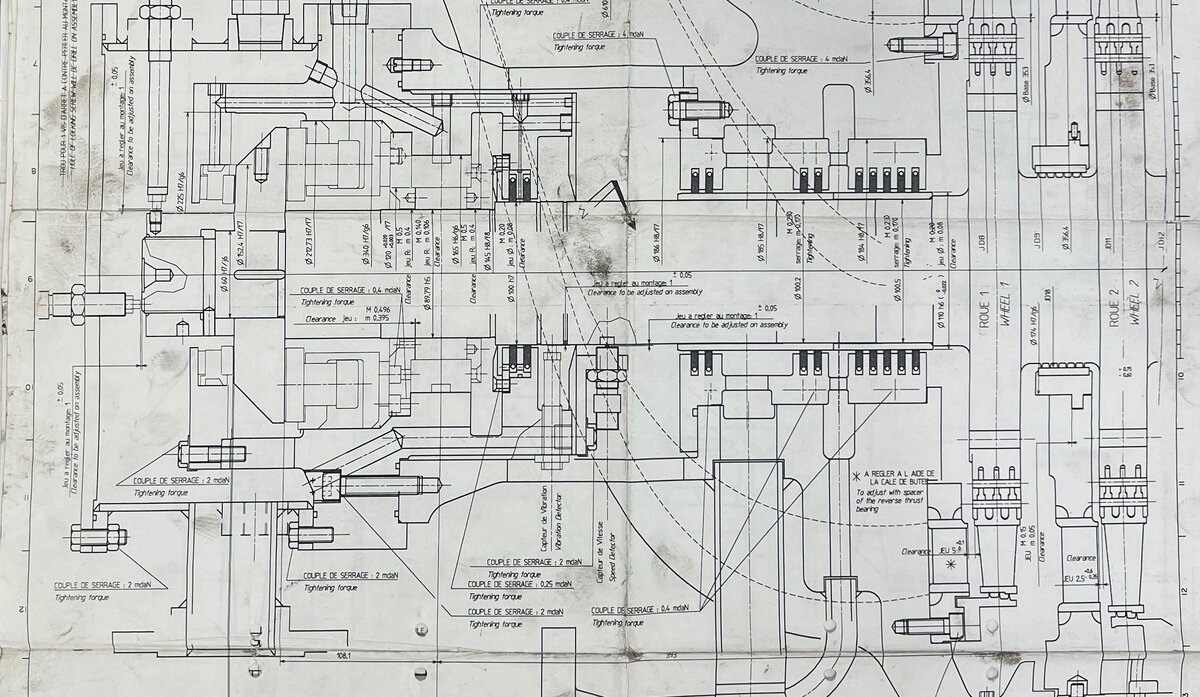
Oiltech Bearings was engaged to recover what engineering data remained, combine it with the available GA drawings, produce a complete set of production drawings, and work alongside the service company responsible for rebuilding the machine. This required systematic inspection of damaged components, re-engineering from physical evidence, and close coordination throughout the rebuild programme.
Project Phases
How we rebuilt knowledge from fragments.
Phase 1 — Inspection & Data Recovery
Extracting engineering data from the wreckage.
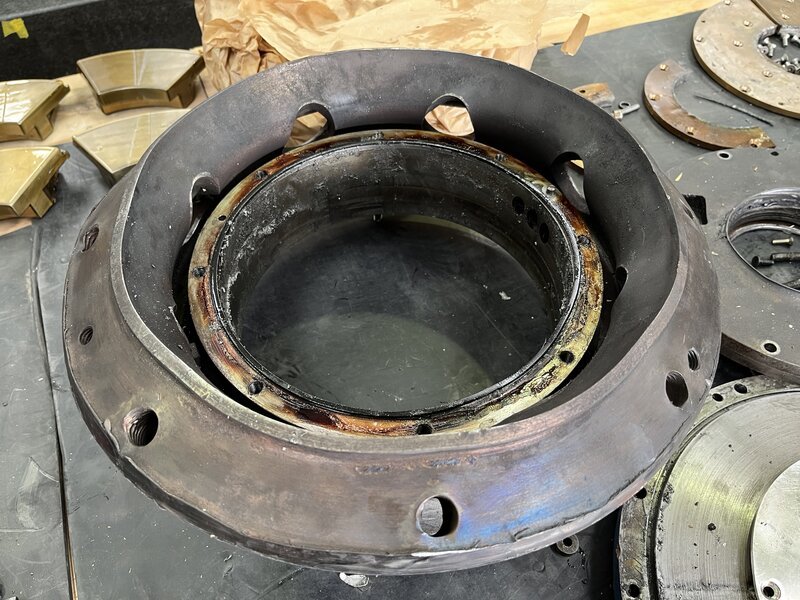
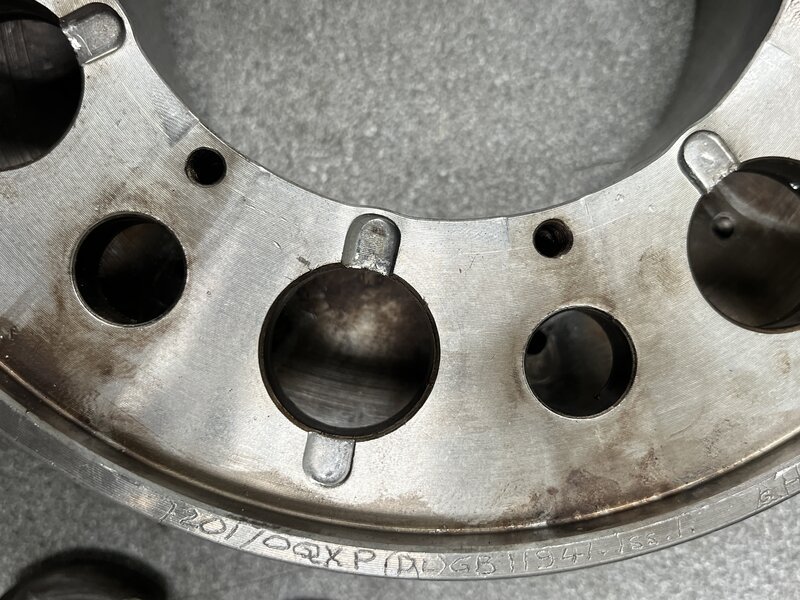
Oiltech engineers conducted a systematic inspection of all surviving components. Despite severe damage, dimensional data, material evidence and geometric references were carefully captured from the parts. The available GA drawings provided useful reference data for overall assembly geometry, which was combined with the physical inspection findings to form a solid baseline for the re-engineering programme.
Phase 2 — Re-Engineering
Creating a full production drawing set.
From inspection data and the GA drawings, Oiltech produced a complete set of production drawings covering the bearing housings, shaft seals and bearing assemblies. Where original geometry required interpretation, engineering judgement was applied and fully documented. These drawings became the contractual manufacturing basis for all components in the rebuild, and were coordinated directly with the service company managing the machine restoration.
Phase 3 — Bearing Repair & Remanufacture
Salvaging what could be saved — replacing what could not.
Each bearing element was assessed individually. Where material integrity and geometry allowed, components were repaired to drawing specification. Heavily damaged elements were remanufactured to the new production drawings. This component-level approach reduced cost and lead time without compromising the integrity of the final assembly.
Phase 4 — Design Improvement
A better equalising thrust bearing emerges from the investigation.
During analysis of the equalising thrust bearing, Oiltech identified that the original levelling plate arrangement was unnecessarily complex — adding manufacturing cost, lead time and assembly risk without a corresponding engineering benefit. Oiltech proposed a redesign to a more conventional and proven geometry: simpler to manufacture, faster to produce, and no less capable in service.
Phase 5 — Design Approval
Engineering case presented and insurer sign-off secured.
Oiltech presented the full design rationale to the end user and the machine's insurance underwriter. The engineering case was accepted, the redesign formally approved, and manufacture authorised. The insurer's sign-off gave the end user a formally endorsed and well-documented route back to service.
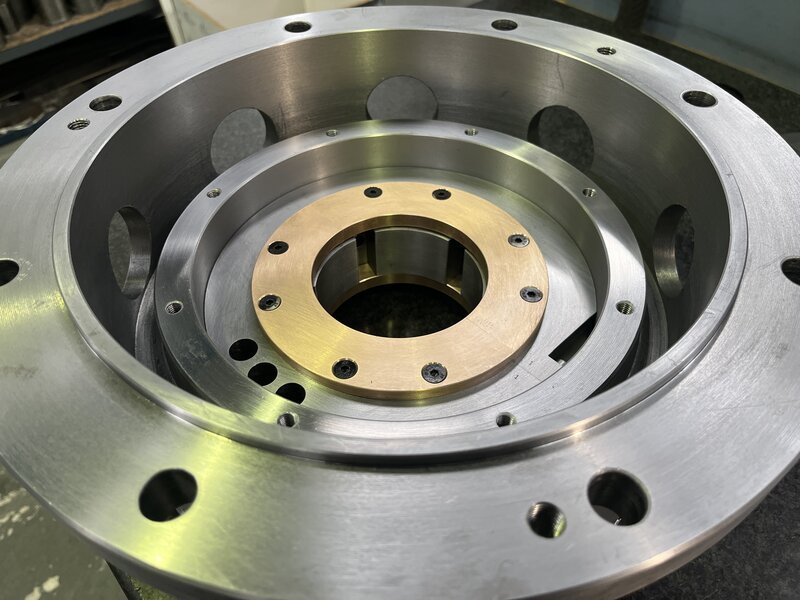
Bearing assembly internals for tilt pad journal bearing, housing, casing, retaining plates before end covers with floating seal assemblies.
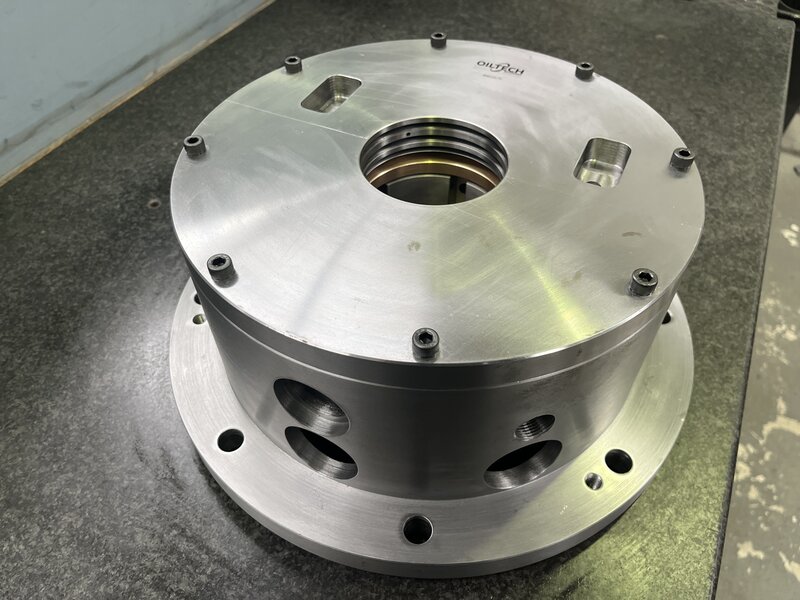
Completed bearing assembly — ready for installation. Full assembly of journal bearings, thrust bearings and seals produced to Oiltech's new production drawings.
Design Insight
The failure created an opportunity to improve the original design.
The equalising thrust bearing's levelling plate arrangement had been over-engineered. By redesigning to a more conventional geometry, Oiltech delivered a component that is easier to manufacture, quicker to source as a spare, and simpler to assemble — with equivalent load-sharing performance.
The original complexity added cost and lead time with no measurable engineering benefit.
Key Outcomes
What the project delivered.
Complete Drawing Set
Housings, seals and assemblies fully documented for manufacture, created from damaged originals and GA reference drawings.
Repair & Remanufacture
Component-by-component assessment: salvageable parts repaired, damaged parts remanufactured — minimising cost and lead time.
Improved Thrust Bearing
Redesigned levelling plate geometry, simpler and lower cost to produce, formally approved as an engineering improvement.
Insurer Sign-Off
Full design approval from the insurance underwriter, giving the end user a formally endorsed path back to service.
Capabilities Demonstrated
Engineering from first principles.
This project required every dimension of Oiltech's capability — inspection, re-engineering, design, bearing repair, remanufacture and formal design approval — managed as a single coordinated programme alongside the service company rebuilding the machine.
More Case Studies
Have a Bearing Challenge That Needs More Than an Off-the-Shelf Answer?
Oiltech Bearings works with OEMs, service centres and end users to solve complex bearing problems — from emergency repair to full re-engineering programmes.