Failure Modes of Whitemetal (Babbitt) Bearings
Understanding how and why bearings fail is key to preventing recurrence and protecting critical rotating equipment.
Root cause analysis of rotating machinery after an unscheduled shutdown or outage can be vital to ensure corrective action is taken to prevent further problems.
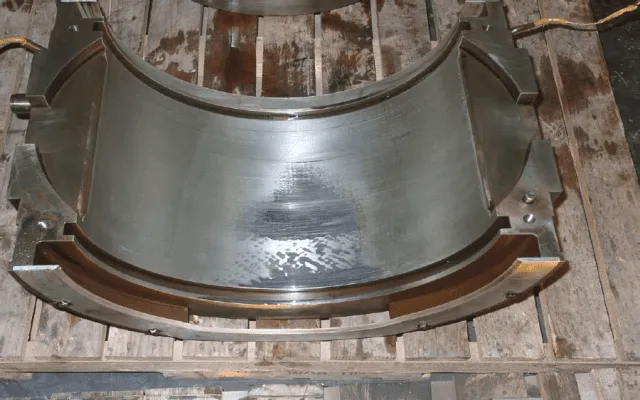
Bearings are designed as a sacrificial component — the manner in which they fail can help understand system or machinery problems. Oiltech can provide insightful analysis based on bearing condition, usually just from photographs of the damage.
Common Failure Modes
Fatigue
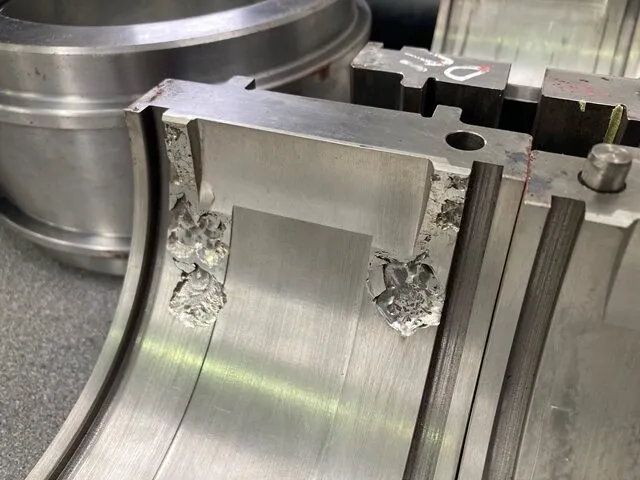
Whitemetal alloy has a very low fatigue strength. When subject to varying loads — normally the vibration of the rotor — cracks will start to appear in the whitemetal layer. These cracks propagate through the material until they reach the interface with the backing material. Close to the boundary layer, these cracks turn through 90 degrees and traverse along the interface until they meet another crack, at which point entire pieces of whitemetal can be ejected from the bearing lining.
Oil Starvation
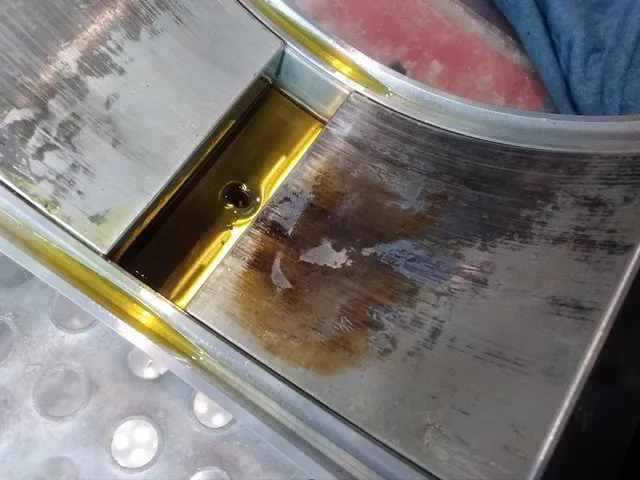
Hydrodynamic bearings require oil films to operate. If there is a reduction or stop in the supply of fresh, cool oil, the oil film will reduce or collapse. The result is metal-to-metal contact causing a wipe, overheat and melting of the whitemetal. The severity of damage depends on having thermal sensors installed to trip the machine and how long it takes the machine to stop.
Wire Wool / Black Scab
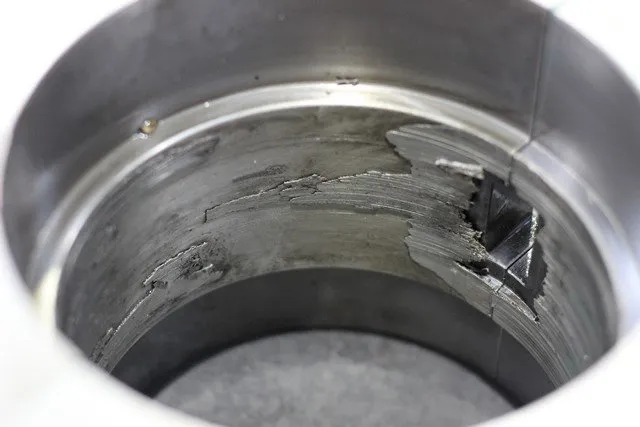
This failure mode is caused by hard particles between the bearing and rotor — typically from nearby grinding work where part of the grinding disc or metal enters the bearing during overhaul. Once inside the bearing, the hard particle embeds into the whitemetal but can leave a protrusion that acts like a cutting tool, slowly machining the shaft. The swarf produced is known as wire wool.
Black scab is essentially the same problem but normally results from high chromium content steels in the rotor or particles from HVOF coatings after restoration work.
Contamination / Scoring
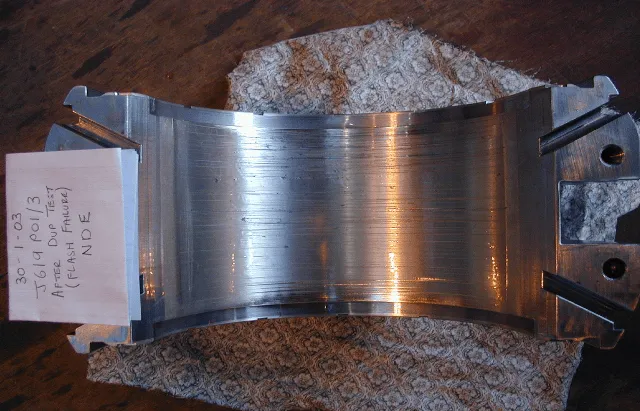
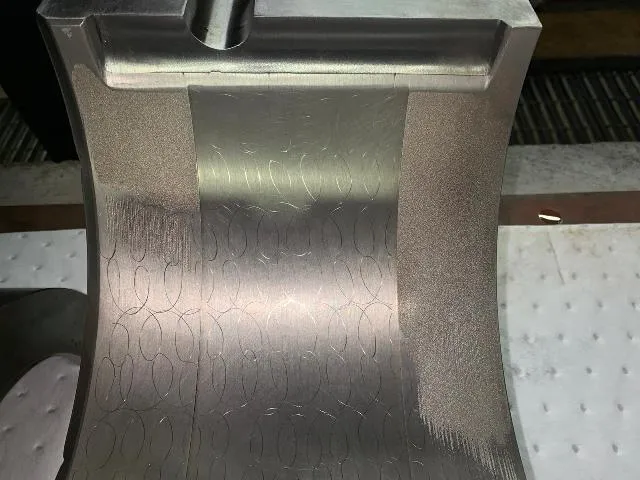
If contamination of dirt and hard particles enters the bearing oil film, they can score the bearing surface. Ideally they are pushed into the soft whitemetal alloy, but often do damage before finding a steady position. This leaves score marks on the bearing and if there are sufficient contaminants, the performance of the oil film is affected.
Misalignment
The oil film between a bearing and shaft is typically 25 to 75 microns thick. Adequate alignment is essential to ensure a consistent oil film. When misalignment occurs, part of the bearing — usually at one end — will run hotter than the rest and the hydrodynamic pressure will be much higher. This causes localised overloading and overheating which can result in material creep and ultimately failure.
Electrical Discharge
Rotating machines can contain residual magnetic fields. During rotation, electrical fields are generated and the electrical potential will discharge through the easiest path — typically the bearings if the machine does not have sufficient grounding strips. Small sparks damage the whitemetal alloy through a process similar to electric discharge machining. The result can be extensive damage to the bearing lining.
Turning Failure Into Prevention
Understanding failure is key to preventing recurrence.
Every failure analysis provides an opportunity to improve bearing design, material selection and operating conditions — reducing risk and improving long-term reliability.
Related Services
Experienced a Bearing Failure?
Send us photographs or details and our team can provide an initial assessment and recommendations.