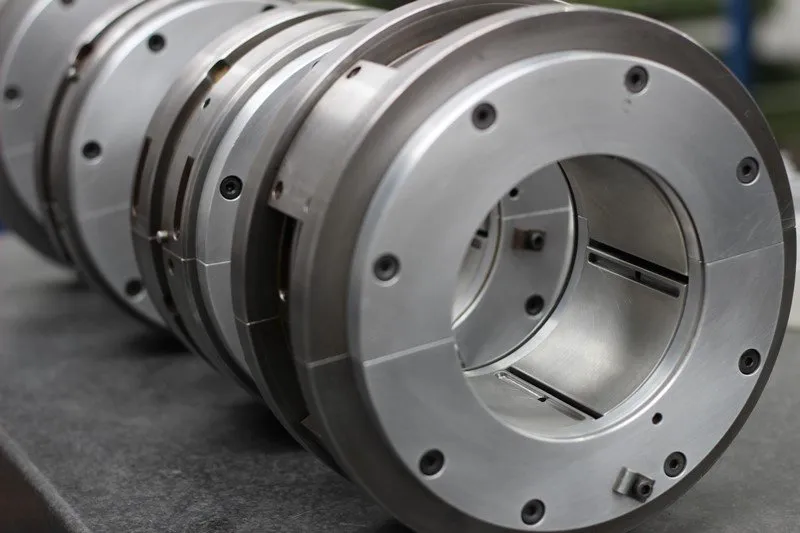
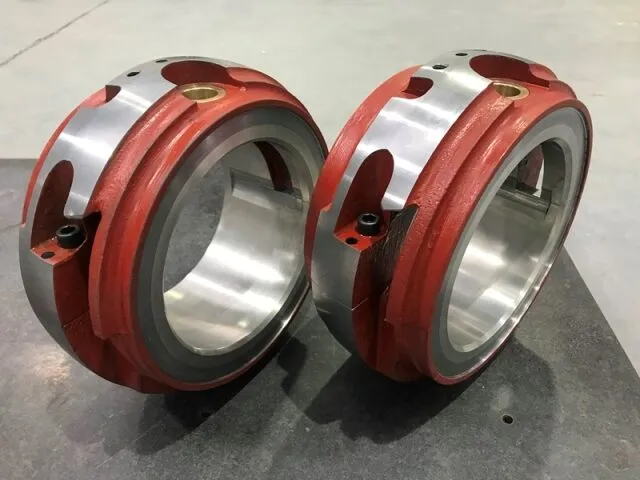
Tilting-pad journal bearing showing individual hydrodynamic pads

Hydrodynamic Lubrication

How rotation, lubricant viscosity and converging geometry create the pressure that supports a shaft without continuous surface contact.

Hydrodynamic lubrication occurs when relative motion draws lubricant into a narrowing gap between two surfaces. The resulting pressure within that moving film supports the applied load and separates the surfaces during normal operation.

The normal supply pump delivers cool, clean oil to the bearing. Rotation and bearing geometry generate the main load-carrying pressure inside the hydrodynamic film.

Operating Principle

How a Load-Carrying Oil Film Forms

All five conditions interact. Supplying oil alone does not guarantee hydrodynamic separation.

  1. 1

    Lubricant Reaches the Inlet

    The system provides lubricant of the required viscosity, temperature, flow and cleanliness to the bearing entrance.

  2. 2

    The Surface Starts Moving

    Rotation drags lubricant along through viscous shear. At zero speed, this self-generated hydrodynamic action does not exist.

  3. 3

    A Converging Gap Develops

    Journal eccentricity, a machined profile or pad tilt creates an inlet that becomes progressively narrower in the direction of motion.

  4. 4

    Film Pressure Builds

    Lubricant resists being forced through the narrowing gap. A pressure distribution develops, rising to a peak and then falling toward the film outlet.

  5. 5

    The Film Supports the Load

    The integrated film pressure balances the applied load. The shaft or collar runs separated from the bearing surface by a very thin lubricant film.

Two Load Directions

Journal and Thrust Bearings

Fixed-profile hydrodynamic journal bearing
Radial load

Journal Bearings

The shaft settles slightly away from the bearing centre under load. Rotation pulls oil into the converging clearance between the journal and bore. Fixed-profile bearings use bore geometry; tilting-pad journal bearings allow each pad to establish its own wedge.

Explore journal bearings
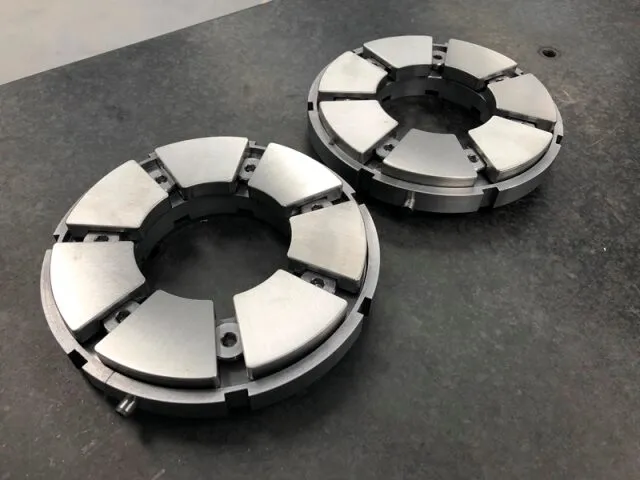
Tilting-pad hydrodynamic thrust bearing
Axial load

Thrust Bearings

The rotating collar moves oil across the pad face. A taper-land profile or pad tilt creates the converging wedge. In a tilting-pad bearing, each pad finds an operating angle determined by load, speed, pivot geometry and oil conditions.

Explore thrust bearings

Do Not Confuse

Lubrication and Support Regimes

RegimeHow load is supportedWhen it occursKey distinction
Full-film hydrodynamicPressure generated by relative motion in a converging filmNormal running at sufficient speed with suitable oil and geometrySurfaces are separated by the fluid film
HydrostaticPressure supplied by an external high-pressure systemJacking oil, low-speed turning or a continuously hydrostatic designCan support load without normal running speed
Mixed lubricationPart fluid film and part local surface contactAcceleration, coast-down, overload or marginal film conditionsSome asperity contact remains
Boundary lubricationMostly surface contact and lubricant boundary layersStart, stop or severe loss of filmWear and wiping risk rises significantly

Film Formation

What Controls Bearing Performance?

Speed

More surface speed generally increases the lubricant-dragging action, but also raises viscous shear and power loss.

Viscosity

Viscosity must be considered at operating temperature. Oil that becomes too thin can reduce film thickness; excessive viscosity increases losses and heat.

Clearance and Geometry

The gap must allow oil flow and form the intended wedge while accommodating tolerance, shaft motion and thermal expansion.

Load

Load changes shaft position, pad angle, pressure and film thickness. Dynamic and transient loads can be as important as steady load.

Oil Supply and Cooling

Continuous clean oil replaces leakage and carries away generated heat. Flow at the bearing matters more than header pressure alone.

Alignment and Surface Condition

Misalignment, runout, roughness or contamination can concentrate load and reduce the local film safety margin.

Operating Cycle

Why Start-Up and Shutdown Are Different

StoppedNo hydrodynamic pressure

Static load may leave the shaft or collar resting on the bearing.

StartingMixed or boundary regime

Film develops as speed rises. Pre-lube and, where fitted, jacking oil reduce contact.

RunningFull-film operation

Designed speed and oil conditions establish separation and load capacity.

Coast-downFilm reduces with speed

Post-lube and lift systems may remain required until the rotor stops.

Practical Questions

Hydrodynamic Lubrication FAQ

What creates the pressure?

Relative motion pulls viscous lubricant into the converging gap. Resistance to flow creates a pressure distribution that supports the applied load.

Does pump pressure carry the machine load?

Normally no. The pump supplies and cools the oil; the hydrodynamic film generates its load-carrying pressure locally. A hydrostatic or jacking system is different.

Do the surfaces touch?

Not during healthy full-film operation. Contact can occur while starting or stopping, or if speed, viscosity, flow, geometry or load no longer supports adequate separation.

Why is clearance necessary?

Clearance provides space for oil flow, thermal expansion and the converging film geometry. Too little and too much clearance can both damage performance.

Technical Basis

This explanation is aligned with Waukesha Bearings' fluid-film operating principle, Kingsbury's hydrodynamic bearing guidance and the lubrication terminology covered by ISO 4378-3:2024.

Apply the Principle to a Real Bearing

Use the rules-of-thumb reference for preliminary checks, or send Oiltech the operating data for a full bearing performance review.