
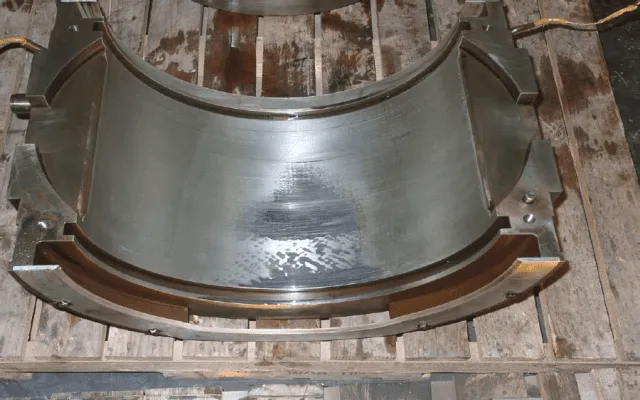
Misalignment concentrates load over a reduced area instead of distributing it across the designed bearing surface. The resulting local pressure and temperature can thin the oil film and progress from polished contact to creep, wiping or fatigue.
What the Damage Looks Like
- Heavy wear or overheating at one end or edge of the bearing
- A diagonal or tapered contact pattern across the lining
- Uneven temperature readings between pads or bearing ends
- Local creep, wiping or fatigue beside relatively unaffected material
Likely Contributing Factors
- Housing, pedestal or shaft-line alignment error
- Shaft deflection or thrust collar runout under load
- Thermal growth different from the cold alignment condition
- Incorrect assembly, seating, shimming or bearing-shell fit
- Pipe strain, foundation movement or changing dynamic loads
Diagnosis and Response
Move From Damage to Root Cause
What to Inspect
- Map wear, contact and temperature patterns around the bearing
- Check shaft-line alignment in relevant cold and operating conditions
- Measure housing bore, shell seating, shaft geometry and collar runout
- Review support, foundation, pipe-strain and thermal-growth data
- Verify bearing clearance, lift or bump checks and pad freedom
Corrective Actions to Consider
- Correct shaft, housing and support alignment at the source
- Restore bearing seating, clearance and mating-surface geometry
- Account for shaft deflection and thermal growth in the alignment target
- Remove assembly constraints that prevent pads or shells from seating
- Review self-aligning or tilting-pad geometry where the application warrants it
Repair or Replace?
Re-lining can restore a damaged surface only after the alignment mechanism is corrected. The backing, fits and geometry should be inspected before repair because distortion or poor seating can reproduce the same edge loading in the new lining.
Diagnosis Note
A localised damage pattern strongly indicates uneven loading but does not by itself locate the source. Measurements under realistic support, thermal and load conditions are needed to distinguish bearing assembly error from shaft-line or machine movement.
Need an Engineering Assessment?
Send photographs, operating data and failure history for an initial review by Oiltech Bearings.