
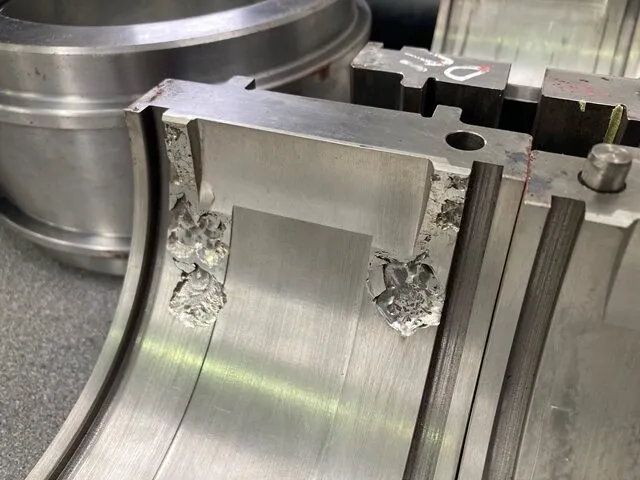
Fatigue damage develops when repeated or fluctuating stress initiates cracks in the bearing alloy. Cracks can propagate through the lining and along its interface until sections break away, reducing the effective bearing area and contaminating the oil system.
What the Damage Looks Like
- A connected network of fine or branching cracks
- Pitting, flaking or pieces of lining missing from the loaded zone
- Cracks that turn and travel near the lining-to-backing interface
- Progressively rough damage rather than one smooth wiped area
Likely Contributing Factors
- High cyclic or dynamic loading at operating temperature
- Rotor unbalance, vibration or repeated load transients
- Excessive temperature reducing the fatigue strength of the alloy
- Overload, poor load distribution or unsuitable lining geometry
- Shaft deflection, misalignment or contact concentrated at an edge
Diagnosis and Response
Move From Damage to Root Cause
What to Inspect
- Trend bearing metal and oil temperatures before the event
- Review vibration, balance history, trips and load transients
- Map the crack pattern against the bearing loaded zone
- Check shaft geometry, alignment, clearances and contact distribution
- Verify alloy, lining thickness and bond condition
Corrective Actions to Consider
- Correct abnormal vibration, unbalance and temperature
- Review bearing load, geometry, clearance and oil-film performance
- Improve load distribution or alignment where damage is localised
- Consider a higher-fatigue-strength alloy when duty demands it
- Inspect and clean the oil system before returning the machine to service
Repair or Replace?
Local blending is rarely appropriate once fatigue cracks are established because cracking can extend beyond the visible area. If the backing remains sound and dimensionally acceptable, stripping and re-lining may recover the bearing; otherwise manufacture or re-engineering should be considered.
Diagnosis Note
Fatigue can occur alongside misalignment, overheating or poor bonding. Photographs help classify the visible pattern, but root cause should be confirmed using operating temperatures, vibration history, shaft condition, material records and inspection of the complete bearing.
Need an Engineering Assessment?
Send photographs, operating data and failure history for an initial review by Oiltech Bearings.